
Wood Fence in San Antonio, TX: Book Your Free Estimate Today
San Antonio Wood Fencing Company for Homes and Businesses
Enhance the security and beauty of your property with a custom wood fence from Alamo Decks & Fence, a fence company in San Antonio that builds in cedar and pressure-treated pine. Whether you want privacy, a clear property line, or more curb appeal, we build the fence around your yard and your budget. Every fence starts with a free, itemized estimate.
Expertly Crafted Wood Fences for Every Need
At Alamo Decks & Fence, we know every property is different. That is why we offer a wide range of wood fencing options. Choose a classic picket fence for the front yard or a solid privacy fence for the back. We use Western Red Cedar pickets and Pressure-Treated Southern Yellow Pine posts and rails, two woods chosen for how they hold up outdoors.
Why Choose Alamo Decks & Fence for Your Wood Fencing Needs?
See what San Antonio homeowners say about us in our customer reviews. Here is why homeowners across San Antonio choose us:
- Custom Design Options: We build board-on-board, shadowbox, side-by-side, horizontal, and traditional picket designs. Simple or detailed, we can build the look you want.
- Proven Materials: Our wood fences use Western Red Cedar pickets and Pressure-Treated Southern Yellow Pine posts and rails. Cedar resists decay on its own. The pine is treated to resist rot and termites where it meets the soil.
- Privacy and Security: Our wood privacy fences create a solid 6-foot barrier. They keep kids and pets in and block the view from the street.
- Professional Installation: Our crews set every post in high-strength concrete and fasten every picket with galvanized ring shank nails. The details you never see decide how long a fence lasts.
The Benefits of Wood Fencing
Choosing a wood fence for your property offers real advantages:
- Natural Look: Wood blends with your landscape. Bare cedar weathers to a soft silver-gray. Stained cedar holds a warm color.
- Versatility: Wood fits traditional and modern homes alike. Go rustic with dog-ear pickets or clean with horizontal slats.
- Cost-Effective: Wood costs less up front than most metal and vinyl options. Repairs are simple because you can swap single boards.
- Environmentally Friendly: Wood is a renewable resource. A damaged picket gets replaced, not the whole fence.
For more reasons homeowners pick wood, read our post on the benefits of wood fences for your home.
Cedar vs. Pressure-Treated Pine: Which Wood Goes Where
We do not pick one wood for the whole fence. We use each wood where it performs best.
Western Red Cedar for Pickets
Cedar is the face of your fence. The USDA Forest Products Laboratory rates western red cedar heartwood as resistant to very resistant to decay. It also shrinks very little, so boards stay flatter through Texas heat. Cedar takes stain and paint well.
Cedar has one limit. The same USDA data shows it is not immune to termites. That is why we never bury cedar in the ground.
Pressure-Treated Southern Yellow Pine for Posts and Rails
Posts and rails carry the load and touch the soil. Pressure treatment protects Southern Yellow Pine against rot and termites at the ground line. Pine is also stronger and cheaper than cedar for framing.
Want the full trade-off? Read our comparison of cedar vs. pine fences and our guide to the best lumber for a wooden fence.
Wood Fence Styles We Build in San Antonio
Style sets your privacy level, your airflow, and your price.
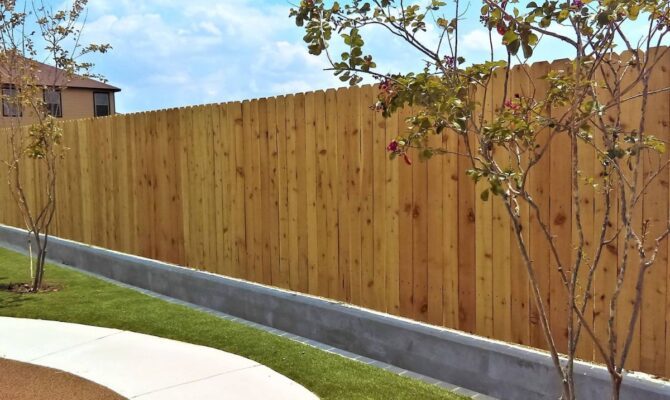
- Board-on-board: Pickets overlap, so no gaps open as the cedar dries. This gives the most privacy.
- Shadowbox: Pickets alternate on both sides of the rail. Wind passes through, and both neighbors see a finished side.
- Side-by-side: Pickets butt edge to edge on one face. This is our lowest-cost solid privacy style.
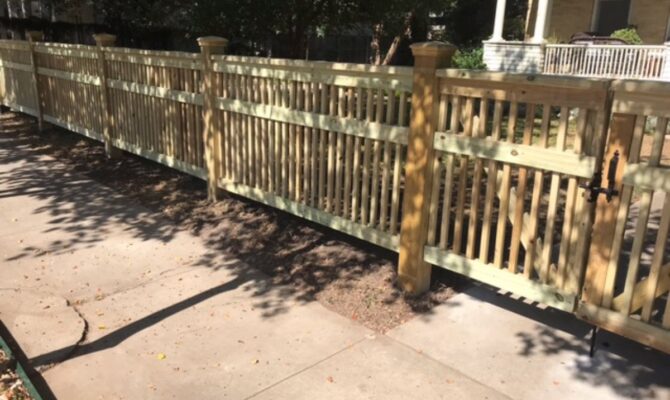
- Picket fence: Spaced boards at a lower height. It defines a front yard without hiding the house.
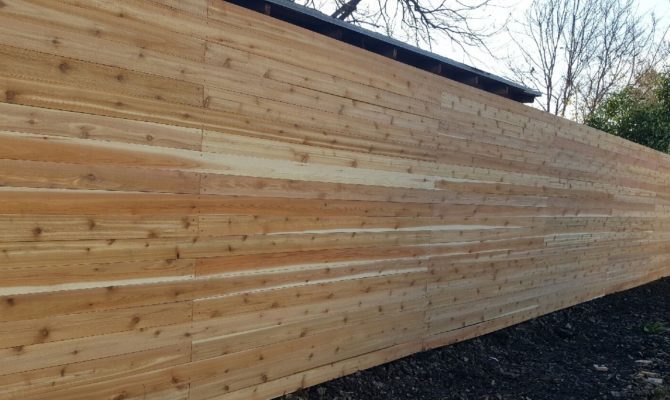
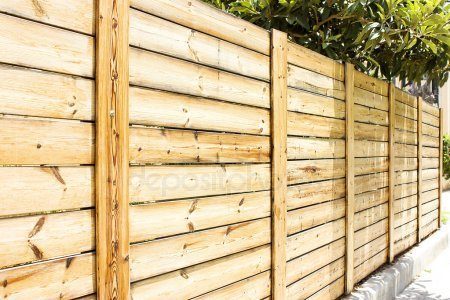
- Horizontal slat cedar: Boards run sideways for a modern look on newer homes.
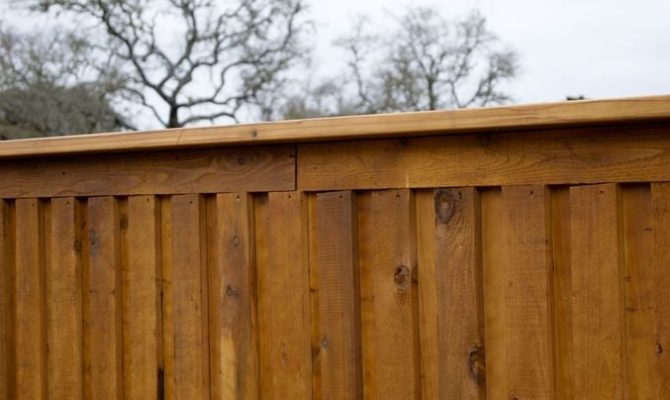
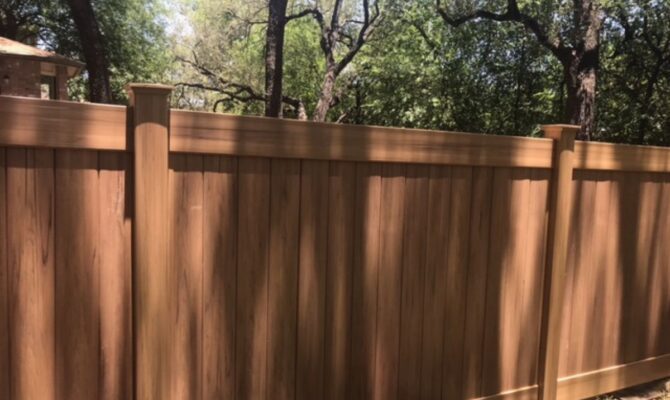
- Cap and trim: A 2×6 or 2×8 cedar cap tops the fence. It finishes the look and shields picket ends from rain.
Not sure which style suits your home? See our tips on matching a fence to your house.
Wood Fence Prices in San Antonio
Privacy Fence (1x6x6 or 1x4x6) w/wood posts
$33 (per linear foot)
Privacy Fence (1x6x6 or 1x4x6) w/galv. posts
$35 (per linear foot)
Walk-Gate (wood)
$450 (each)
6’ high horizontal slat cedar fence w/PT posts
$125 (per linear foot)
Walk gate (horizontal)
$950 (each)
Cedar cap & trim 2x6
$17 (per linear foot)
Cedar cap & trim 2x8
$19.50 (per linear foot)
What a Wood Fence Costs by Yard Size
Multiply your fence length by the price per foot. Then add gates and upgrades. Here is how common projects add up with our published prices:
| Project | Wood posts | Galvanized posts |
|---|---|---|
| 100 ft privacy fence | $3,300 | $3,500 |
| 100 ft privacy fence + 1 wood walk gate | $3,750 | $3,950 |
| 200 ft privacy fence | $6,600 | $7,000 |
| 200 ft privacy fence + 1 wood walk gate | $7,050 | $7,450 |
Adding a 2×6 cedar cap and trim to a 100 ft run adds $1,700.
What Changes Your Final Price
- Post type: Galvanized steel posts add $2 per foot. They do not rot at the ground line, which is where wood fences fail first.
- Gates: Each wood walk gate adds $450. Horizontal gates run $950.
- Style and trim: Horizontal slats and cap and trim cost more than a standard privacy face.
- Site conditions: Rocky caliche, slopes, and tree roots add digging time.
- Old fence removal: Tearing out an existing fence adds labor.
Your written estimate lists each of these, so there are no surprises. Need to spread out the cost? See our fence financing options.
How Long Does a Wood Fence Last in San Antonio?
A wood fence lasts as long as its weakest part. In most yards, that part is the post at the soil line. Moisture collects there, rot sets in, and the fence starts to lean.
You can extend the life of your fence three ways:
- Protect the posts. Choose galvanized steel posts, or keep soil and mulch pulled back from wood posts.
- Keep a finish on the cedar. USDA research puts the service life of lightly pigmented penetrating stains at about 2 to 3 years. Plan to restain on that cycle.
- Clean gently. The Forest Products Laboratory warns that aggressive power washing strips wood fibers and shortens the life of your next finish.
Our post on keeping your wooden fence looking new walks through the routine. For seasonal care, see our summer fence maintenance tips.
Wood Fence Repair and Replacement
Not every old fence needs to come down. If the posts are solid and only pickets have failed, repair often costs less.
Replace the fence when you see:
- Posts that rock when you push them
- Soft wood at the soil line that a screwdriver sinks into
- Rusted nails bleeding stains down the pickets
- Cupped or split boards across whole sections
Our fence repair team in San Antonio will tell you which path makes sense during your free estimate.
Wood Fence Permits, Height Limits, and HOA Rules
Most wood fence projects inside San Antonio city limits need a building permit. Repairs need one too when they cover more than 25% of the old fence length.
- Height: Side and rear yard fences top out at 6 feet. Solid front yard fences stop at 3 feet.
- HOAs: Texas law protects your right to a perimeter fence. Your HOA can still set materials and placement.
- Nearby cities: Boerne, Schertz, Cibolo, and other towns set their own rules.
We walk you through permits on every job. For the full breakdown, read our guide to privacy fence permits and height limits in San Antonio.
Our Wood Fence Installation Process
- Free estimate. We measure your fence line and give you an itemized quote with a schedule.
- Permits and HOA. We help with your permit and hand you specs for your HOA packet.
- Posts. We set each post in one bag of 4000 psi high-strength concrete.
- Rails and pickets. We hang triple rails and fasten cedar pickets with hot-dipped galvanized ring shank nails.
- Gates and trim. We hang gates on a cedar frame with self-latching hardware, then add cap and trim if you chose it.
Learn more about how we plan each build on our custom fence installation page.
Product Overview
Pickets
- Western Red Cedar
- 1 x 6 x 6, actual size 5/8” x 5-1/2” x 6’ long (#2 grade)
- 1 x 4 x 6, actual size 5/8” x 3-1/2” x 6’ long (#2 grade)
- All natural, with no chemical treatment, so it is friendly for family and pets
- Naturally resistant to decay
- Can be painted or stained
- Manufactured in the United States
Posts
- Pressure-Treated Southern Yellow Pine
- 4 x 4 x 8 long, actual size 3.56” x 3.56” x 8’ long (#2 grade)
- Manufactured from southern yellow pine, a renewable resource, for an eco-friendly choice
- Galvanized steel posts available as an upgrade
Triple Rails
- Pressure-Treated Southern Yellow Pine (#2 grade)
- Manufactured from southern yellow pine, a renewable resource, for an eco-friendly choice
Nails
- Hot dipped galvanized for outdoor use
- Ring shank nails for better connection of pickets to rails
Concrete
- One bag per post hole
- 4000 psi High-Strength concrete
- Meets ASTM C 387 compressive strength requirements
Gates
- Hardware
- Rust-resistant hardware (black finish)
- Self-latching fingertip release
- 2×4 cedar frame
Wood Fence Gallery
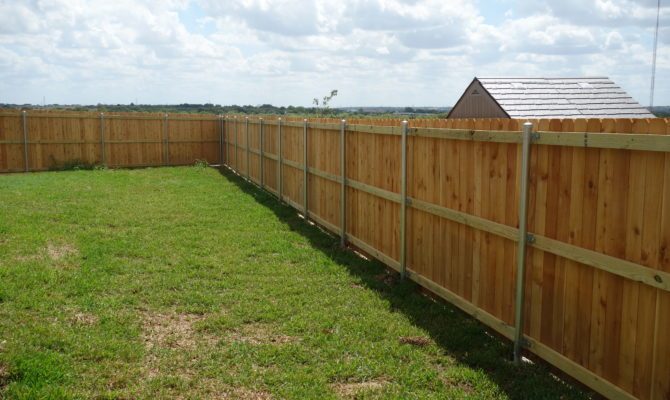
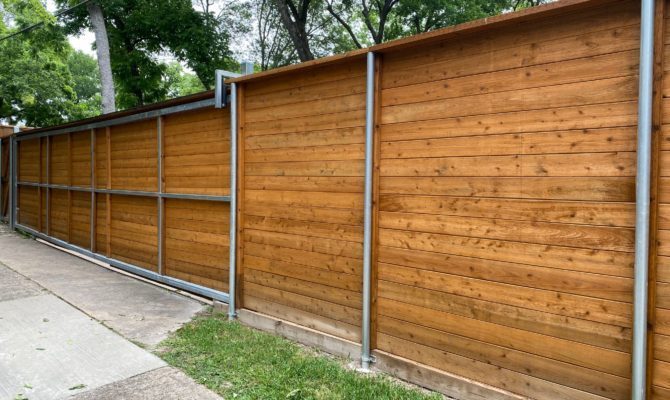
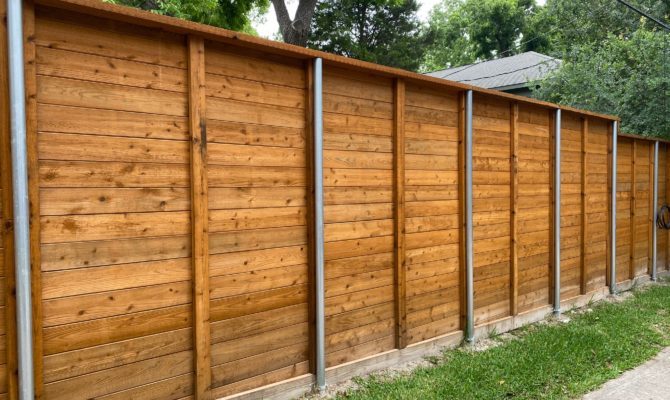
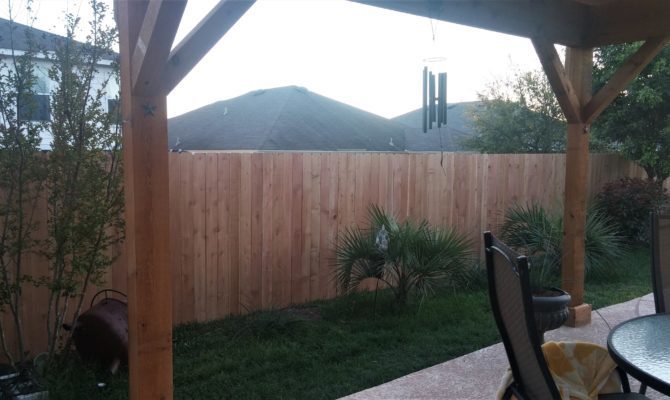
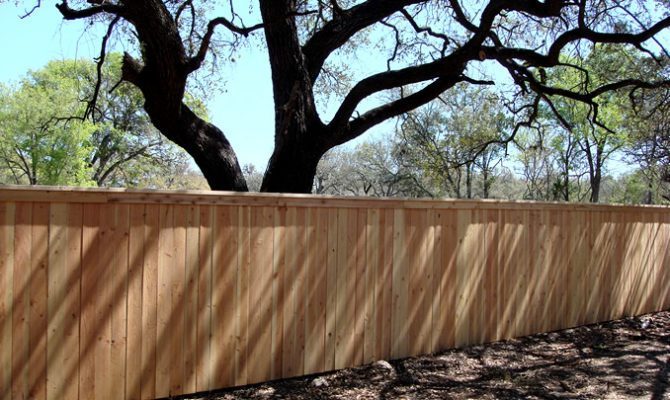
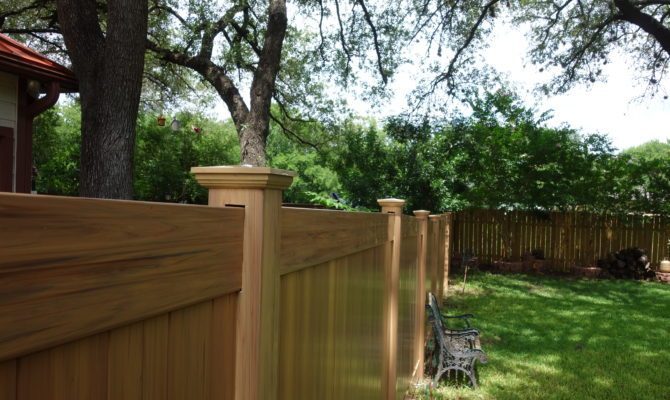
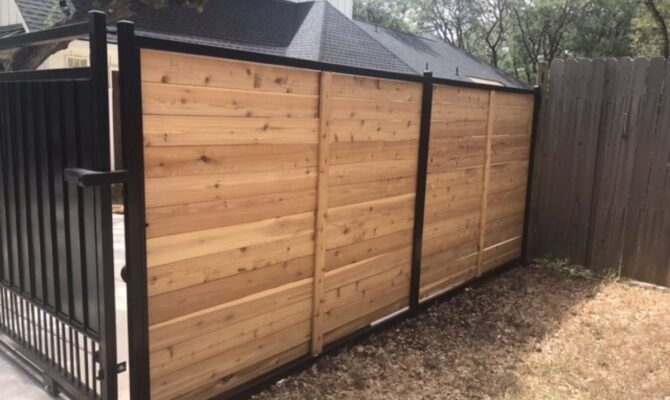
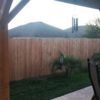
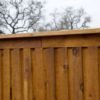
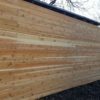
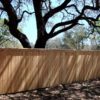
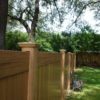
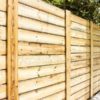
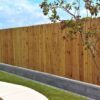
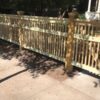
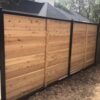
Wood Fence Installation Across Greater San Antonio
We build wood fences across Greater San Antonio, including Stone Oak, Alamo Heights, Helotes, Boerne, Schertz, and Cibolo. See every community on our areas served page.
Wood is one of several materials we install. Compare all of your options on our residential fencing page, or see our commercial fencing services for business properties.
Wood Fence FAQs
How much does a 100 ft wood fence cost in San Antonio?
A 100 ft cedar privacy fence costs $3,300 with wood posts or $3,500 with galvanized posts. Gates, cap and trim, and site work add to that.
Is cedar or pine better for a fence in Texas?
Use both. Cedar makes the best pickets because it resists decay and stays flat. Pressure-treated pine makes the best posts and rails because treatment protects it in the ground.
How often should I stain a cedar fence?
Plan on every 2 to 3 years for a penetrating stain. Restain sooner if the color fades or water stops beading.
Are wood posts or steel posts better?
Galvanized steel posts last longer. Wood posts rot at the soil line first, and that is what makes a fence lean.
Do I need a permit for a wood fence in San Antonio?
Yes, in most cases inside city limits. Repairs need one when they cover more than 25% of the old fence.
Do you repair wood fences?
Yes. If your posts are sound, we can often replace pickets or sections instead of the whole fence.
Do you offer free estimates?
Yes. Every estimate and consultation is free. Request your free wood fence quote to get started.
Contact Alamo Decks & Fence for Your Wood Fencing Project
If you live in San Antonio and need a reliable wood fence company, Alamo Decks & Fence is here to help. We offer free consultations and detailed estimates, so you know exactly what to expect.
Ready for a new wood fence? Contact Alamo Decks & Fence today to schedule your consultation.
BUILD YOUR FENCE TODAY!
If you’re looking to beautify and enhance the security of your property, turn to Alamo Decks & Fence in Bexar County. We truly value our customers, which is why you can trust us to build your fence using the highest quality materials at the best prices possible.