
Fence Etiquette: Neighbor Rules to Know Before You Build
Thinking about putting up a fence around your home? Material and budget are only part of the job. The way you handle the project with the people next door matters just as much. Good fence etiquette keeps the peace, protects your property value, and helps you avoid boundary fights. Here are the rules to follow before, during, and after your install.
Which Way Should a Fence Face? Who Gets the Good Side
This is the question neighbors argue about most. A wood fence has a good side (the smooth, finished face with only the pickets showing) and a back side (the side that shows the posts and horizontal rails).
The standard rule: the good side faces out, toward your neighbor and the street. It is the polite choice, and it keeps your fence looking right from the curb. A fence built backward, with rails facing the street, looks unfinished and can hurt your curb appeal.
Texas has no statewide law that forces you to give your neighbor the good side. But many HOAs and city rules require the finished side to face any street, alley, or shared boundary. So check local rules before you decide.
If you want a clean look on both sides, ask about a neighbor-friendly fence (also called a good neighbor fence) that looks the same from each yard. Common options include:
- Shadow box fences, which alternate pickets for privacy plus airflow and light
- Board-on-board fences, which overlap boards so both sides look finished
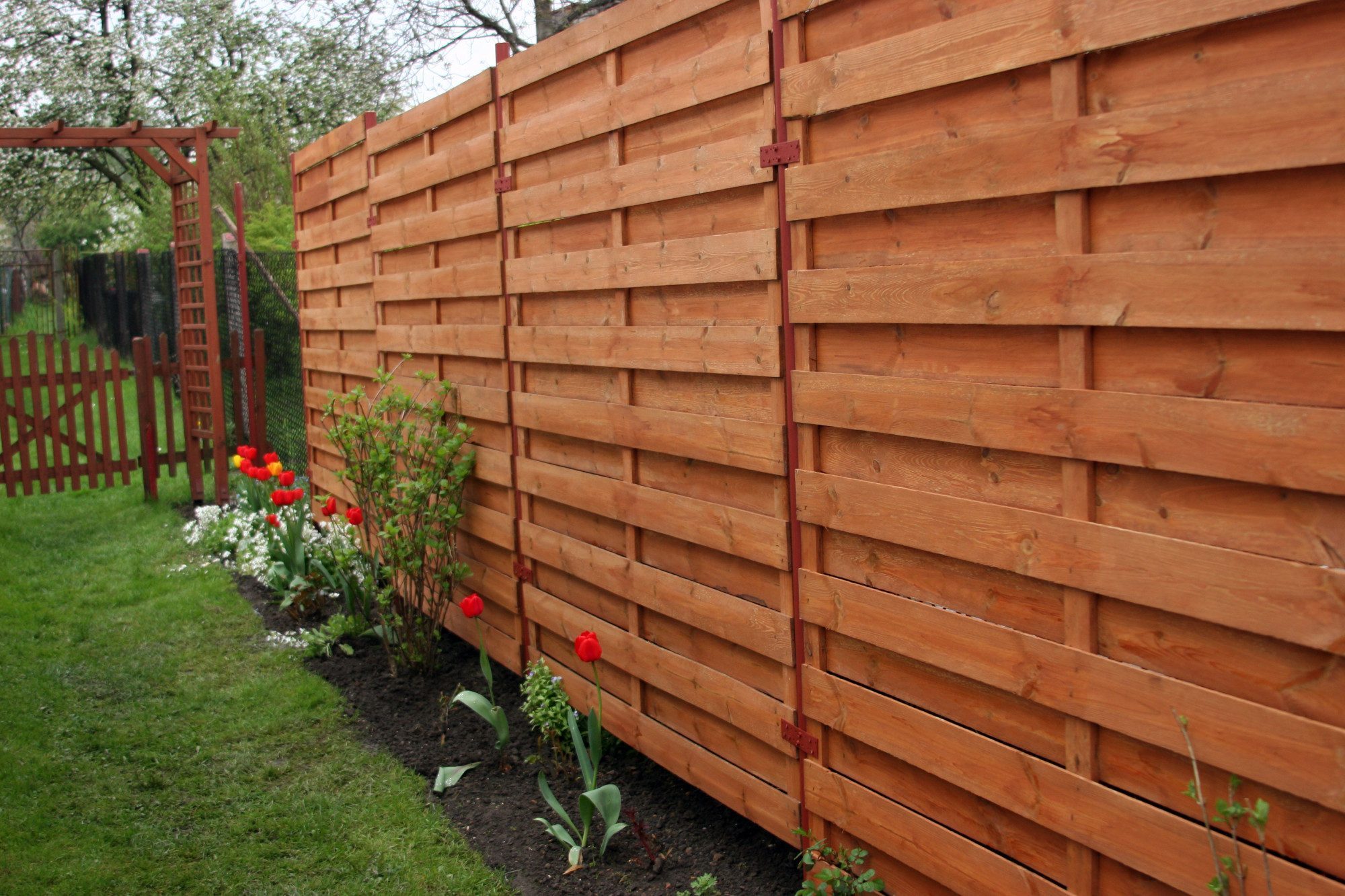
- Horizontal fences, which read the same from either yard
These styles cost a bit more, but they end the good-side debate for good.
How to Tell Which Fence Is Yours
Ownership comes down to the property line, not the good side. A common myth says the owner is whoever faces the rails. That is not how it works.
- If the fence sits fully on your side of the line, you own it and you maintain it.
- If it sits directly on the property line, you and your neighbor likely own it together as a boundary fence.
- The good side and bad side have no bearing on who owns the fence.
To confirm, pull your property survey, deed, or plat map. If you cannot find a survey, a licensed surveyor can mark your exact lines. Never assume the old fence sits on the line. Many do not.
Confirm Your Property Lines Before You Build
Before the first post goes in, confirm where your property starts and ends. Check with the county or hire a surveyor if you are unsure. This step prevents misunderstandings and boundary disputes that can end in legal action.
As a general rule, set your fence a few inches inside your line, not on it. Building even a few inches over the line can make the fence your neighbor’s property and leave you on the hook to move it.
Planning to build next to a fence your neighbor already owns? You have two clean choices: place yours right against theirs, or leave enough room to mow between them. A narrow gap just collects weeds. For more on early-stage planning, see our guide to common DIY fencing mistakes.
San Antonio Fence Rules to Know First
Etiquette is one thing. City code is another. San Antonio sets fence limits under the Unified Development Code, and going over them can mean fines or a tear-down.
- Front yard: solid fences (wood, masonry) max 3 feet. Open fences (chain link, wrought iron) max 4 feet.
- Interior side and rear yards: up to 6 feet.
- Corner lots: the side facing a street is treated like a front yard, with tighter limits.
Most fences inside city limits need a permit, and you apply through the city’s BuildSA portal. San Antonio spans Bexar, Comal, and Medina counties, so limits and permit rules can vary by location. Confirm current rules with the city before you build. A licensed local crew can handle this for you. We install fences across San Antonio and the surrounding area.
Talk to Your Neighbors First
You are not required to ask permission, but a heads-up goes a long way. Tell the neighbors who share your boundary before work starts. Most will appreciate being included, and the conversation can pay off.
If it is a boundary fence, your neighbor may offer to split the cost so they get the benefit too. A short talk now beats a long dispute later.
Who Pays for a Shared Fence?
In Texas, there is no statewide law that forces neighbors to split fence costs. A few principles guide most cases:
- If you build entirely on your side, you usually own it and pay for it.
- If both parties use it as a boundary fence, you may share rights and costs.
- Any cost-sharing or maintenance deal should be in writing.
A written agreement protects both sides if someone moves or the fence needs repair down the road.
Check Your HOA Rules
If you live in an HOA, check the rules before you buy anything. Associations often set the material, color, height, and style you can use, and some limit fences entirely. Reviewing this now saves you time, money, and a forced redo later.
Maintain Your Fence
Fence etiquette continues long after install. Keep your fence clean and in good repair so it looks good and lasts. A fence that is always dirty or falling apart reflects on you, your neighbor has to look at it too, and a run-down fence can drag down home values on the whole street.
For wood fences, clean off dirt and debris each year and reseal or restain when the finish wears. See our tips on keeping a wood fence looking new.
Fence Etiquette FAQ
Do I have to give my neighbor the good side?
No Texas law requires it. The good side facing out is a courtesy and the industry norm, and many HOAs and city codes do require it for fences facing a street.
What is a good neighbor fence?
It is a fence that looks the same from both yards. Shadow box, board-on-board, and horizontal styles all qualify.
Can I attach a screen, lattice, or plants to my neighbor’s fence?
Only with their okay. If the fence is theirs, it is their property. Ask first to avoid a dispute.
Can I paint or stain my side of a shared fence?
If you own it, the choice is yours. If it is shared or your neighbor’s, ask before you change the look. Mind any HOA color rules.
Is it rude to build a privacy fence?
No. A privacy fence is your right. A quick conversation keeps things friendly. Just avoid a “spite fence” built only to bother a neighbor, since Texas courts can treat that as a nuisance.
Should I tip fence installers?
Tipping is not expected. If your crew did great work, a strong review, a referral, or cold drinks on a hot day all go a long way.
Contact Alamo Decks and Fence
Need a fence that keeps the peace and looks great from both sides? We build wood, chain link, and ornamental iron fences for homes and businesses across San Antonio. Contact us for a free estimate from licensed, local fence builders.

BUILD YOUR FENCE TODAY!
If you’re looking to beautify and enhance the security of your property, turn to Alamo Decks & Fence in Bexar County. We truly value our customers, which is why you can trust us to build your fence using the highest quality materials at the best prices possible.