
3 Unique Ways to Use Your Pergola This Summer in San Antonio
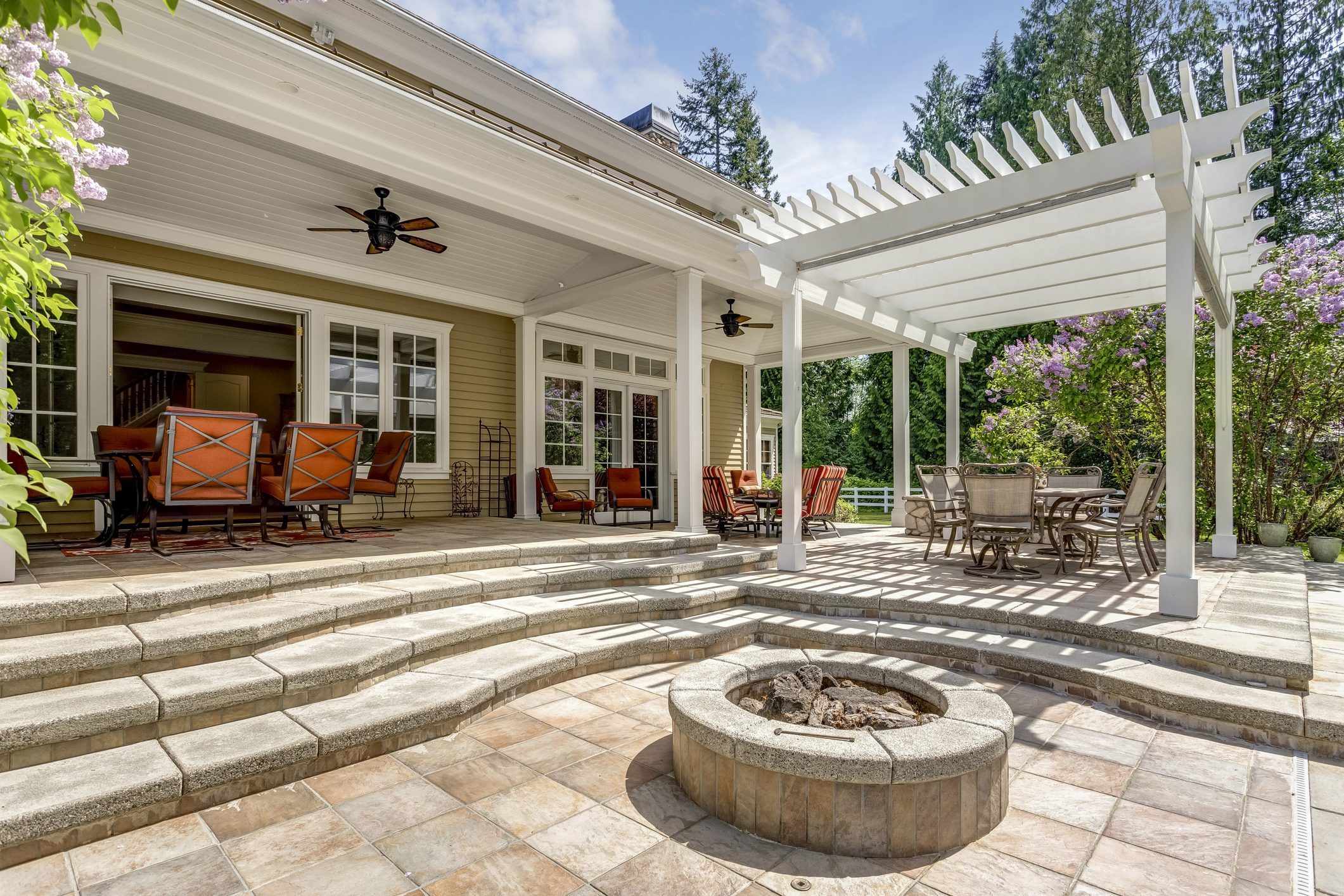
A pergola is an outdoor structure with columns that support an open grid of rafters and beams. You can leave the top open or add a cover for shelter. It can stand on its own or attach to your house.
That open roof is the whole point, and it is also the catch. A pergola filters light. It does not block it. In San Antonio that difference decides whether you use the space or avoid it.
Most people put a table under theirs and stop. Here are three better uses, plus the practical questions that come up once you start pricing one.
1. Host an Outdoor Movie Night
Got kids and a few neighbors worth inviting? Run a movie night under the pergola. It beats crowding everyone into a living room.
Show an animated feature for the kids one night. Run a horror marathon with the adults the next. Grab comfy chairs, cushions, and blankets, and watch under the stars.
You will need power. Plan an outdoor outlet during the build, not after. Retrofitting electrical to a finished pergola costs more and looks worse.
2. Hold an Early Morning Yoga Class
Slatted tops get hot by mid-morning here. Early is better.
Run a summer yoga class with friends and start the day with fitness and fresh air. You get the morning breeze before the heat sets in, and the mood boost carries through the day. In July, that window closes around nine.
3. Cook in an Outdoor Pizza Oven
If your family loves pizza, build an outdoor pizza oven under the pergola. A clay oven in one corner with a small prep counter beside it works well.
Add a mini-fridge for cold drinks. String lights along the beams. Wind chimes if that is your thing.
One caution. A wood-fired oven under an open cedar structure needs clearance and a plan for embers. Talk to your builder about placement before you pour the pad.
Do Pergolas Actually Provide Shade in Texas?
Partly. This is where a lot of online advice gets soft.
A standard open-slat pergola blocks somewhere between a third and half of direct sun, depending on rafter width and spacing. That is real relief in April. It is not enough in August, when the National Park Service reports San Antonio averages 116 days at or above 90°F.
If you want a pergola you can sit under at 3 p.m. in July, you need one of these:
- Tighter rafter spacing. More boards, less gap, more shade. Cheapest fix, decided at design stage.
- A fabric canopy or shade sail. Retractable options let you open it up in spring.
- Louvered panels. Adjustable slats that close for full shade or rain.
- A solid roof. At that point you have a patio cover, which is a different structure.
Get the orientation right too. A pergola running east to west casts far less useful midday shade than one oriented north to south. That is a design decision, not an upgrade you can buy later.
Pergola, Patio Cover, Gazebo, or Arbor?
These four get mixed up constantly. Quick definitions:
- Pergola. Open or slatted roof on columns. Filters sun. Does not stop rain.
- Patio cover. Solid roof, usually attached to the house. Blocks sun and rain.
- Gazebo. Freestanding, solid roof, often octagonal, sometimes with railings or screens.
- Arbor. Smaller than a pergola. Usually an arched entry or garden feature, not a place to sit.
Pick a pergola for light and structure. Pick a patio cover when you want a room you can use in the rain. Plenty of San Antonio yards use both.
Already have a deck? See how pergolas and patio covers work with an existing deck before you settle on a design.
What a Pergola Costs to Build
Most homeowners spend between $2,100 and $6,400 on a professionally built pergola. The national average sits near $4,250 for a 100-square-foot structure, according to 2026 cost data from Angi and HomeAdvisor. That works out to roughly $30 to $60 per square foot.
Materials drive about 80% of the total. Labor typically runs $500 to $1,000 on a standard build.
Motorized louvered systems are a different category. Angi puts those near $13,700 on average, and large custom systems run far higher.
Three line items people forget:
- Electrical. Outlets, fans, and lighting add cost and need a licensed electrician.
- Permits. The City of San Antonio treats pergolas as accessory structures. Attached builds and larger freestanding structures need a permit. Confirm your scope with Development Services at 210-207-1111.
- HOA approval. A city permit does not cover you with your HOA. Get written approval first.
Wondering about resale? Our post on how pergolas and patio covers add value to your home covers that side. Spreading the cost is also an option through our financing page.
Common Pergola Mistakes in San Antonio Yards
We see the same four problems on repair calls.
Posts set too shallow. Bexar County clay swells and shrinks with our wet-dry cycles. Posts that are not anchored properly in concrete will lean within a few seasons.
Untreated softwood. Pine looks fine on day one and grays out fast under our UV load. Cedar holds up far better against insects and rot in this climate.
No finish plan. Wood pergolas need resealing every one to three years here. Skip it and you get checking and splitting.
Undersized beams for the span. Long spans need proper sizing. A sagging beam is expensive to fix after the fact.
None of these are exotic. They come from builds that skipped engineering to hit a price.
Pergola Questions San Antonio Homeowners Ask
How much shade does a pergola give?
A standard open-slat pergola blocks roughly a third to half of direct sun. Tighter rafter spacing, a fabric canopy, or louvered panels all increase that.
What is the best wood for a pergola in Texas?
Cedar. It resists insects and decay naturally and handles heat and UV better than pressure-treated pine.
Do I need a permit for a pergola in San Antonio?
Usually yes. The city treats pergolas as accessory structures, and attached builds require a permit. Check your scope with Development Services before you start.
How long does a pergola last?
A well-built cedar pergola lasts 15 to 20 years with regular sealing. Skipping maintenance cuts that sharply.
Can I attach a pergola to my house?
Yes. Attached pergolas need a properly flashed ledger board so water does not get behind your siding. That is a job for a builder, not a weekend.
What is the difference between a pergola and a gazebo?
A pergola has an open or slatted roof and usually a rectangular frame. A gazebo has a solid roof, stands free, and is often octagonal.
Contact Alamo Decks and Fence
Alamo Decks and Fence builds custom pergolas and patio covers across San Antonio and Bexar County. We work in cedar, vinyl, and fiberglass, and we handle permits and design.
See what our customers say on our reviews page. Then call us or request a free quote.
BUILD YOUR FENCE TODAY!
If you’re looking to beautify and enhance the security of your property, turn to Alamo Decks & Fence in Bexar County. We truly value our customers, which is why you can trust us to build your fence using the highest quality materials at the best prices possible.